
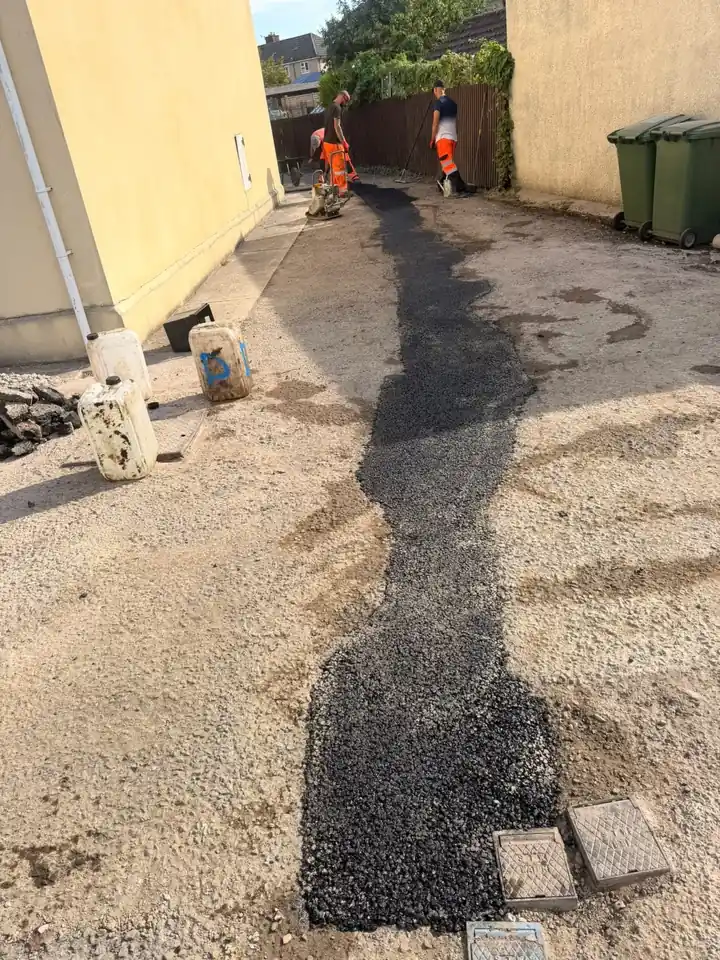
Low water pressure in the house: causes and fixes
Is low water pressure your plumbing or the mains? Do the jug test, check the stopcock, see the 7 metre minimum your water company must meet, then fix it.
Low water pressure in a house is usually caused by a stopcock or valve that is partly closed, a leak or narrow old pipe on your own supply, scale in a tap or shower head, or a problem on the water company's side. Test the kitchen cold tap with a jug, check every tap to see how widespread it is, then open the stopcock fully before calling anyone.
Key points
- Time how long the kitchen cold tap takes to fill a one-litre jug, then divide 60 by the seconds to get litres per minute.
- If one tap is weak, look at that tap. If every tap is weak, look at the stopcock, your supply pipe or the mains.
- Ofwat's standard is a minimum of seven metres static head (about 0.7 bar) in the water company's communication pipe, not inside your house.
- The pressure gauge on a combi boiler shows the heating circuit, not your mains water pressure.
- Pumping directly off the mains is restricted: a pump drawing more than 12 litres a minute needs the water company's consent.
A shower that dies when someone flushes the toilet, a bath that takes an age to fill, or a combi that can't keep up all point to the same question: is the problem in your house or out in the street? Answer that first and you avoid paying for a pump or a new boiler that won't help. This post walks through a simple flow test, a diagnosis table, the checks you can safely do yourself, who is responsible for which pipe under the rules in England and Wales, and the fixes that actually raise pressure and flow. We fix low pressure problems in homes across Gloucestershire, often in older properties where the supply pipe is decades old.
Pressure or flow: the one-litre jug test
Pressure is the force pushing water along the pipe. Flow is how much comes out in a minute. A house can have decent standing pressure and still poor flow if the pipe is narrow or partly blocked, and flow is what you feel at the shower. This quick test measures it with kit from the kitchen cupboard.
- Turn everything else offMake sure no taps are running, the washing machine and dishwasher are off and no toilet cistern is refilling.
- Open the kitchen cold tap fullyThe kitchen cold tap is normally fed straight from the incoming mains, so it is the fairest test of your supply.
- Time a one-litre jugStart a timer as the water hits the jug and stop it at the one-litre line. Do it twice and take the average.
- Work out litres per minuteDivide 60 by the number of seconds. Six seconds is 10 litres a minute; twelve seconds is 5 litres a minute.
- Repeat at a busy timeTry again early in the morning or early evening. If the figure drops sharply only then, demand on the network may be part of the problem.
Other signs worth noting
The Consumer Council for Water's guide (opens in a new tab)2 suggests a standard bath should take about five minutes to fill and a toilet cistern about 1 minute 40 seconds to refill. If yours take far longer, write down the times and dates. That log is useful whether you end up calling a plumber or the water company.
As a rule of thumb from our own work, if the kitchen cold tap gives much less than about 10 litres a minute, a combi or a mains-fed mixer shower is likely to feel weak. That is trade experience rather than an official standard, so always check the minimum flow the manufacturer states for any boiler or shower you are thinking of buying.
What could cause low water pressure in my house?
Where the weak flow shows up tells you most of what you need to know. Check the cold and hot at the kitchen, the bathroom basin, the bath and the shower, then match what you find to the table.
| What you notice | Likely cause | What to do |
|---|---|---|
| One tap or shower weak, the rest fine | Scaled aerator or shower head, or a part-closed isolation valve | Descale the outlet and check the small valve under it |
| Every cold tap weak, all day | Stopcock part closed, narrow or corroded supply pipe, or a supply leak | Open the stopcock fully, then check the meter for a leak |
| Everything weak only at busy times | High demand on the network or a shared supply pipe | Log the times and talk to your water company |
| Sudden drop across the house | Burst main, works nearby or a frozen pipe | Ask neighbours and check your water company's updates |
| Only the hot water is weak | Low tank head on gravity systems, or a combi or cylinder issue | See the hot water section below |
| Shower dies when a toilet flushes | Supply pipe too small for the demand on it | A plumber can measure flow at several outlets |
Check the stopcock, valves and outlets yourself
A stopcock partly closed is the most common cause we find, often after a previous repair or a new kitchen. Your internal stopcock is usually under the kitchen sink, though in older houses it can be under the stairs, in a cellar or beneath a floorboard near the front door. Turn it anticlockwise until it stops. On an old brass stopcock, then turn it back a quarter turn so it doesn't seize fully open.
Next, look for small isolation valves on the pipes to individual taps, toilets and showers. A slotted screw head should line up with the pipe when open. If one outlet is weak, unscrew its aerator or shower head and soak it in descaler or vinegar, as limescale and grit build up quickly in hard water.
If the stopcock is stiff, weeps from the spindle or won't turn, leave it rather than forcing it. A snapped spindle leaves you unable to turn the water off, and replacing a stopcock is a routine job for our plumbing repair service. The water company's outside stop valve, usually under a small cover near the boundary, is theirs to operate, so ask them if you think it has been knocked partly closed.
When to call a professional
Where DIY stops
Opening valves, cleaning outlets, the jug test and reading the meter are fine to do yourself. Replacing a stopcock, cutting into the supply pipe, anything inside a boiler casing and the safety valves on an unvented cylinder are jobs for a qualified plumber or engineer.
Who is responsible for low water pressure?
Responsibility changes at the boundary. Ofwat's guaranteed standards scheme (opens in a new tab)1 says water companies must maintain a minimum pressure of seven metres static head in the communication pipe serving your property. The Consumer Council for Water puts that at about 0.7 bar and explains that the communication pipe runs from the main and ends at the outside stop valve.
Past that valve, the supply pipe into your home is normally the owner's responsibility, along with everything inside. The water company has no duty to meet the pressure standard inside your private supply pipe or your house, which is why a narrow old pipe on your side can leave you with poor flow even when the street supply is fine.
Ofwat says causes such as inadequate pumping, mains that are too small and leaks or blocked service pipes on the network are the company's responsibility. Ofwat also notes that homes at the top of a hill may receive lower pressure than those at the bottom. If your own checks find nothing, contact your water company. They can take pressure and flow readings and tell you whether the problem is in their pipes or yours. Ofwat adds that companies can improve pressure by renovating or relining the main, replacing it with a larger one, or installing pumps.
Local note
Hillside homes in the Stroud valleys and on the Cotswold edge
Plenty of houses around Stroud, Nailsworth and the Cotswold escarpment sit on steep slopes, and Ofwat confirms height affects pressure. Two houses on the same street can get noticeably different flow, so compare with a neighbour at a similar height before deciding your plumbing is at fault.
Low pressure on the hot water only
If the cold is strong but the hot is weak, the cause is in the hot water system rather than the supply. Which one depends on the type of system you have.
On a gravity system with a cold water tank in the loft, hot water pressure comes only from the height of that tank above the outlet. A shower on the floor just below the loft gets very little. A pump can help here, and our post on whether you need a shower pump explains which type and where it can and can't go.
On a combi, the boiler heats mains water as it passes through, so hot flow is limited by the boiler's output and your incoming supply. Weak hot water with strong cold can mean a blocked filter or scale inside the boiler, which is a job for an engineer on the Gas Safe Register, never a homeowner with the casing off. The HSE strongly encourages (opens in a new tab)6 checking the engineer's Gas Safe ID card before any work starts; the back of the card shows which appliances they are qualified to work on. If you ever smell gas, call the gas emergency line on 0800 111 999. Our post on combi boilers with no hot water covers the user-level checks.
One common mix-up: the gauge on the front of a combi shows the pressure of the sealed heating circuit, not your water supply. Topping it up won't improve the taps. Our boiler pressure guide explains what that gauge is for.

Hidden causes in older houses
In older houses the supply pipe itself is often the problem. Old galvanised steel pipe corrodes inside until the bore is a fraction of its original size, and old lead or narrow plastic supply pipes may never have been sized for a modern bathroom, combi and dishwasher running together. Water Regs UK says (opens in a new tab)7 existing lead pipes don't have to be replaced unless there are concerns about lead levels in the drinking water, but if you are renewing a lead supply pipe for flow anyway, you remove the lead on your side at the same time. Ask your water company whether their communication pipe is lead too.
Shared supplies are another one. Many older terraces were built with one supply pipe feeding several houses, so your shower can fade when next door runs a bath. The Consumer Council for Water lists shared supplies among the common causes of low pressure.
A leak on your own supply pipe also steals flow and can go unnoticed for months under a garden or solid floor. Turn off every tap and appliance, note the meter reading, wait half an hour and check again. If it has moved, read our guide to finding and dealing with a leak, and if water is coming through a ceiling, call for an urgent plumber after turning off the stopcock.
How to increase water pressure: what works and what doesn't
Once you know the cause, the fix is usually clear. The rules matter here: the Water Supply (Water Fittings) Regulations 1999 (opens in a new tab)3 require you to notify the water company and get consent before fitting a pump or booster drawing more than 12 litres a minute that is connected to a supply pipe. They also require notice for any water pipe laid outside a building less than 750mm or more than 1350mm below ground. Stuart Turner explains (opens in a new tab)4 the 12 litre limit protects public health, because a pump pulling hard on the mains can draw contaminated water into the drinking supply.
| Fix | When it helps | Watch out for |
|---|---|---|
| Open the stopcock and valves fully | Weak flow at every cold tap | Don't force a seized stopcock |
| Descale aerators and shower heads | One outlet weaker than the rest | Scale returns quickly in hard water areas |
| Replace the old supply pipe | Corroded, lead or undersized pipe | Lay it 750mm to 1350mm deep, or notify the water company |
| Shower pump | Gravity-fed hot and cold from a loft tank | Never on a combi or mains-fed system |
| Inline mains booster | Slightly weak mains to a combi | Limited to 12 litres a minute without consent |
| Break tank with a pump | Low mains where more flow is needed | Needs space and proper design |
| Accumulator (no pump) | Flow drops when a second tap opens | Uses stored water and air pressure to even out dips |
| Ask the water company to test | Your checks find nothing | Their duty ends at the outside stop valve |
Choosing a shower that suits your supply
Ofwat points out that some modern showers and heating appliances won't work below certain pressures, so check your supply before you buy. If your flow test is poor, our post on electric and mixer showers explains which type copes better, and our shower installation team can match the shower to what your pipes can deliver.
If the jug test and stopcock checks haven't solved it, send us your flow figure through our contact form and we'll come out, measure the supply and tell you honestly whether the fix is in your pipes or the water company's.
Sources and further reading
- Water pressure (opens in a new tab), Ofwat. Guaranteed standards scheme minimum of seven metres static head in the communication pipe; company responsibilities; hill height, demand and meter effects; some showers need certain pressures; water companies can test pressure and flow
- Low water pressure (opens in a new tab), Consumer Council for Water (CCW). Bath fill and cistern refill times; seven metres equals about 0.7 bar; the communication pipe ends at the outside stop valve; no company duty inside the private supply pipe; shared supplies and supply pipe leaks as causes
- The Water Supply (Water Fittings) Regulations 1999, regulation 5 (opens in a new tab), legislation.gov.uk. Notice and consent needed for a pump or booster drawing more than 12 litres per minute from a supply pipe, and for pipes laid outside less than 750mm or more than 1350mm deep
- How to choose the right booster pump as a homeowner (opens in a new tab), Stuart Turner. The 12 litre per minute mains pumping limit protects public health; break tanks and accumulators for low mains supplies
- Standards of service (opens in a new tab), Ofwat. Guaranteed standards scheme payments for incidences of low water pressure in England and Wales, automatic payments, exemptions for severe or exceptional weather, and CCW's role in disputed claims
- Domestic gas: frequently asked questions (opens in a new tab), Health and Safety Executive (HSE). Gas work must be done by a Gas Safe registered engineer; consumers are strongly encouraged to check the ID card, which shows the appliances the engineer is qualified for; gas emergency number 0800 111 999
- Are lead pipes legal? (opens in a new tab), Water Regs UK. New lead pipework has long been prohibited; existing lead pipes need not be replaced unless there are concerns about lead levels; contact your water company with questions
Sources checked on 4 November 2026.
About this guide
Written by the team at CLA Developments, who do plumbing, heating, building and tiling work across Gloucestershire and the Cotswolds, and reviewed by Alistair Hunt, who leads the team on site. Customers on Checkatrade (opens in a new tab) mention him by name for bathroom refits, tiling and plumbing repairs. The facts were checked against the sources listed above. This is general guidance, not a survey of your home. Gas work must be done by a Gas Safe registered engineer, new electrical circuits by a qualified electrician, and structural changes need a structural engineer and building control. Spotted something out of date? Email us and we will correct it.
More questions
Can't see yours? Call or email and you'll speak to the people who do the work.
A sudden drop across the whole house usually means something has changed outside: a burst main, repair work in the street, very high demand or a frozen pipe in cold weather. Ask a neighbour first, then check your water company's website or call them. If only your house is affected, check the stopcock and look for signs of a leak, such as a damp patch or a meter that turns with everything off.
It shouldn't. Ofwat says you should not notice any difference in pressure after a water meter is fitted. If your pressure dropped straight after a meter installation, the outside valve may not have been fully reopened, so contact your water company and ask them to check it. The meter is also handy for spotting leaks, because it should stay still with every tap and appliance off.
Demand on the network peaks when most people shower, cook and run appliances, so pressure can dip at those times. Ofwat lists high demand, and hosepipe and sprinkler use in dry spells, as common causes. If the dip is severe, keep a log of dates and times for a couple of weeks and send it to your water company, which can investigate.
Possibly. Under Ofwat's guaranteed standards scheme (opens in a new tab)5, water companies in England and Wales must make a set payment for incidences of low water pressure in their pipes, and most payments are made automatically. Exemptions apply, for example when severe or exceptional weather stops them meeting the standard. The scheme does not cover problems in your own supply pipe or plumbing. Contact your water company first, then the Consumer Council for Water if a claim is disputed.
Not if the problem is the supply. A combi can only heat the water your mains delivers, so a bigger combi on a weak supply often disappoints. Do the jug test on the kitchen cold tap first. If the flow is poor, fix the supply pipe or valves before spending money on a boiler, and ask the installer to measure flow and pressure before recommending a model.
Keep reading
Water pressure, taps, toilets, showers, leaks and frozen pipes.


Free quotes & advice
Get a no-obligation quote and straight answers about your project. Tell us about the job and we will give you straight answers and a clear written quote.
Book a site visitLines open Monday to Friday, 9am to 5pm