
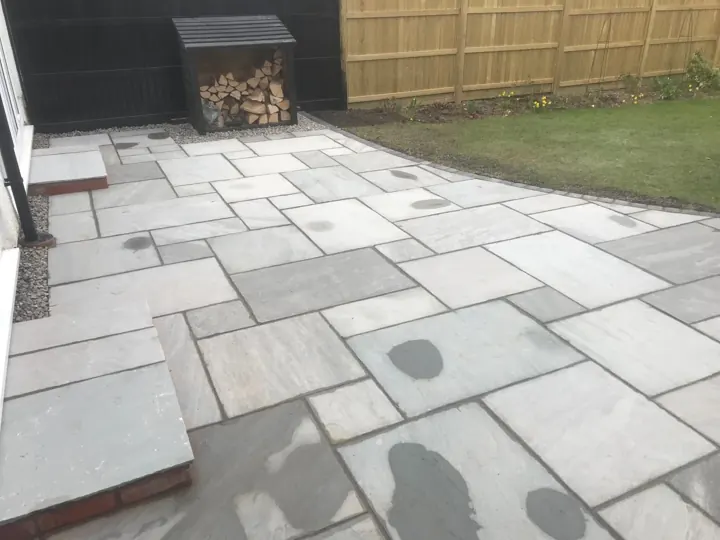
Patio installers in Gloucestershire
Porcelain and natural stone patios, terraces, paths and entrances, laid with proper falls and drainage.
Listed on Checkatrade Member of the Association of Master Tradesmen Registered company 16784817 (opens in a new tab) Email photos of the job for a quote
A patio is only as good as what lies under it: a firm sub-base, a fall away from the house and slabs on a full mortar bed. CLA Developments lays porcelain and natural stone patios, terraces and entrances across Gloucestershire that drain properly and stay put through winter. Every job starts with a free site visit and a written quote.
“We highly recommend these guys - they did everything we needed & were a pleasure to deal with.” Checkatrade review, GL5. More reviews
CLA Developments are patio installers in Gloucestershire, laying porcelain and natural stone patios, terraces, paths and entrances that drain properly and stay put through the winter. We work in Gloucester, Cheltenham, Cirencester and across the county. Most patio problems come from below the surface: a thin sub-base, no fall, water running back towards the house, or slabs laid on dabs of mortar that let water sit and freeze. We dig out, build a proper base, set the falls and plan the drainage before any slab is laid. Because we also do building and drainage work, we can deal with steps, edging and new drain runs as part of the same job.
Sub-base and preparation for a porcelain patio in Gloucester
A patio is only as solid as what lies under it. We dig out topsoil and soft ground down to firm subsoil, then lay and compact a granular sub-base in layers with a plate compactor. The depth depends on the ground and the use, with more needed on soft clay or where a vehicle might cross. Skimping here is what leads to sinking and rocking slabs a few years later.
Around Gloucester many gardens sit on heavy clay that holds water, so preparation and drainage matter even more. We check for services such as pipes and cables before digging, and look at where water already collects in the garden after rain.
- Excavate to firm ground and remove topsoil
- Lay and compact a granular sub-base in layers
- Set levels and falls with string lines
- Fix edge restraints so the patio cannot spread
- Plan drainage before any slabs are laid

Which way should a patio fall?
A patio should fall away from the house, never towards it, so rainwater runs off rather than pooling. The finished surface should sit well below the damp proof course. Raising a patio up to the back door is one of the commonest causes of damp in a ground floor wall, especially on older houses.
Where the patio meets the house at a door, or where there is nowhere for water to run off naturally, we fit a channel drain or linear drain across the paving and connect it to a soakaway or suitable drainage. A new drainage run in a trench is one of the photos in our gallery. If you have an existing drain or gully that is blocked or broken, our drainage and pipework repairs can be done at the same time.
For front gardens and driveways, drainage rules can be stricter, so it is worth checking with your local planning authority before replacing a large permeable area with paving.
Before your patio survey
- Measure the area roughly and mark it out with string or spray
- Note where water pools after heavy rain
- Find the damp proof course line on the house wall
- Locate drains, gullies and outdoor taps nearby
- Choose porcelain or natural stone samples to look at outside
- Think about access for machinery and deliveries
Porcelain versus natural stone patios in Cheltenham
Outdoor porcelain is usually 20mm thick, very dense and absorbs almost no water. It resists stains from barbecues and leaves, needs no sealing and holds its colour. Because it is so dense, it needs a bonding primer brushed onto the back of every slab so the mortar bed grips, and it needs a diamond blade for every cut.
Natural stone, such as sandstone, limestone and slate, has a texture and variation that suits older houses and Cotswold gardens. It is more porous, so it can stain and grow algae more easily, and some stones benefit from sealing. Thickness can vary from slab to slab, which takes more care when laying. Photos of both natural stone and porcelain patios are in our gallery, and in the period gardens around Cheltenham we lay plenty of both.
Slip resistance and frost
Outdoor tiles and slabs should have a textured or anti-slip finish rated for external use. Smooth indoor porcelain becomes slippery when wet and must never be used outside. For frost, the slab needs to be rated frost-resistant and, just as important, laid on a full bed with no voids where water can sit, freeze and push the slab up.

Full bed or pedestals for terraces and balconies
On ground-level patios we lay slabs on a full mortar bed, with the whole underside supported. Spot bedding on dabs of mortar leaves gaps where water collects, freezes and cracks slabs, and it lets the patio rock. A full bed gives a solid, quiet surface that stays level.
On roof terraces, balconies and over a waterproof membrane that must not be damaged, slabs are often laid on adjustable pedestals instead. Water drains through the joints and runs across the membrane underneath. Pedestal systems need the right slab strength and must follow the manufacturer's guidance, and the structure has to be checked for the load. A porcelain terrace by a marina, finished with a glass balustrade, is one of the projects in our gallery.
Outdoor tiling for entrances, steps and paths
Front paths, entrance steps and porches need the same care as a patio, with extra attention to the step edges and the threshold at the front door. We use bullnose or matching step treads, set consistent step heights and make sure water runs away from the door.
Where a patio leads straight in through bifold doors, matching the indoor and outdoor tiles gives a continuous look. Porcelain ranges often come in internal and external versions of the same colour, with the outdoor one thicker and textured. We can lay both sides, and our indoor floor tiling work follows the same careful setting out.
Grouting matters outside too. We use a suitable exterior grout or jointing compound, leave movement joints at the house wall and across larger areas, and let the patio cure before it takes furniture or heavy use. Around Cirencester and other Cotswold towns, local stone paths and entrances often need matching to existing walls and steps.
If you want a patio, path or terrace that drains well and stays level, book a free site visit and we will give you a clear written quote.
Free quote for a patio across Gloucestershire
- We reply within one working day, Monday to Friday, 9am to 5pm.
- A free, no-obligation site visit.
- A clear written quote before any work starts.
Prefer to talk it through? Call 07858 305739.
Tell us about the job
Two details and we'll call you back.
That didn't send, sorry. Please try again, or call 07858 305739.

What our customers say about our patios
We highly recommend these guys - they did everything we needed & were a pleasure to deal with. Perfect - thank you!
Alistair did a fantastic job. He was courteous and efficient. Left the job in a tidy state. Reasonably priced. Would highly recommend.
Great service, Alistair was friendly and pleasant and the job was completed to a high standard.
I am very happy with the work that Alistair did for me. He came within one day of me contacting him. I highly recommended him to anyone who needs a reliable and competent plumber. I will definitely use him again in the future.
CLA Developments Ltd was incorporated in October 2025. Reviews dated before then, and any that mention AJH Plumbing and Heating, are from jobs done by the same team under its earlier trading name.
Guides about patios & outdoor tiling
Straight answers from the people doing the work, written for homes in Gloucestershire.
Patios & outdoor tiling in every town we cover
Pick your town for local detail on patios & outdoor tiling there: the housing, what to expect and how quickly we can reach you.
Gloucestershire
- Patio installers in Gloucester
- Patio installers in Cheltenham
- Patio installers in Stroud
- Patio installers in Cirencester
- Patio installers in Tewkesbury
- Patio installers in Nailsworth
- Patio installers in Wotton-under-Edge
- Patio installers in Forest of Dean
- Patio installers in Bishop's Cleeve
- Patio installers in Dursley
- Patio installers in Tetbury
- Patio installers in Cinderford
- Patio installers in Coleford
- Patio installers in Moreton-in-Marsh
Worcestershire
South Gloucestershire
Wiltshire
Four steps from first call to finished job
The same process whether it's a new tap or a full extension, so you always know what happens next.
- 01
On-site survey
We come out, look at the job properly and talk through what you want, including any drawings you already have.
- 02
Clear quote
A written quote with the work, the price and a realistic schedule. No obligation and no surprises later.
- 03
Design & layout
We agree the layout, materials and finishes with you before anything is ordered or removed.
- 04
Installation & work
One team carries out the work, keeps the site tidy and checks everything with you at the end.

Reviewed on Checkatrade
Every review on this site comes from a real customer.

Master Tradesmen
Members of the Association of Master Tradesmen.
Qualified tradespeople
Fully qualified, with years of hands-on experience on every job.
Guaranteed work
Guarantees on materials and workmanship.
Patios & outdoor tiling: your questions answered
Can't see yours? Call or email and you'll speak to the people doing the work.
Both work well when laid properly. Porcelain is low maintenance, stain resistant and needs no sealing, but needs a bonding primer and specialist cutting. Natural stone has more character and suits older houses, but can stain and grow algae and may need sealing. We bring samples and help you choose for your garden.
Enough for water to run off without the slope being noticeable. A common rule of thumb is around 1 in 60 to 1 in 80, always away from the house. Porcelain, being smoother, can take slightly less fall than riven stone. Where the fall cannot run to a lawn or border, a channel drain collects the water.
The usual guidance is that the finished patio sits at least 150mm below the damp proof course. Building a patio up to the door threshold can push water into the wall and cause damp inside. Where you want a level threshold, a channel drain at the door is needed.
For ground-level patios, yes. A full bed supports the whole slab so it cannot rock or crack, and there are no hollows for water to freeze in. Spot bedding on dabs of mortar is quicker but causes problems later. On roof terraces over a membrane, pedestals may be used instead.
Proper outdoor porcelain has a textured finish and an anti-slip rating for external use, so it grips well when wet. The problem comes when indoor tiles are used outside, which should never happen. Moss and algae on any surface can also make it slippery, so keep it swept and cleaned.
The size, ground conditions and depth of dig set how much sub-base is needed. Access for machinery and waste removal, the choice of porcelain or natural stone, drainage, steps, edging and any existing paving to take up all count. Levels next to the house matter too, because the finished patio must sit below the damp-proof course. We give a clear written quote after a free site visit.
Often, using pedestals that sit on the waterproofing without piercing it. The roof structure must be strong enough for the slabs and use, and the membrane must be in good condition. We look at the roof first and, where needed, recommend a structural check before planning the terrace.
Free quotes & advice
Get a no-obligation quote and straight answers about your project. We will help you choose tiles that suit the room and plan the layout before anything is fixed.
Book a site visitLines open Monday to Friday, 9am to 5pm