
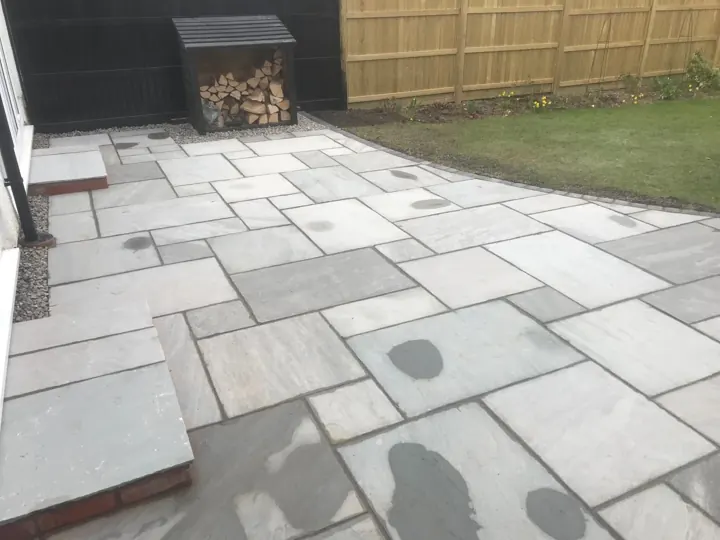
Paving contractors in Gloucestershire
Natural stone and porcelain paths, front entrances, steps and garden paving, laid on a proper base with the right falls.
Listed on Checkatrade Member of the Association of Master Tradesmen Registered company 16784817 (opens in a new tab) Email photos of the job for a quote
Paving contractors in Gloucestershire: CLA Developments lays front paths, entrances, steps and garden routes in natural stone and porcelain, built on a firm base with edging that holds. We set the falls so water runs away from the house. Every job starts with a free site visit and a written quote, with no obligation.
“We highly recommend these guys - they did everything we needed & were a pleasure to deal with.” Checkatrade review, GL5. More reviews
CLA Developments lay garden paving and paths across Gloucestershire: front paths, entrances, steps and routes through the garden in natural stone and porcelain. We work in Cheltenham, Stroud, Cirencester and the towns and villages between. A path is a narrow strip that takes concentrated wear, sits beside lawns and borders that want to creep over it and often has to climb or drop a level on the way. That makes edging, falls and the setting out of steps as important as the slabs themselves. We do not lay driveways, block paving or tarmac. We focus on the routes people walk every day, built on proper bases so they stay level and drain.
Planning a garden path: route, width and use
Start with how the path will be used. A route from the back door to the bins, a shed or a vegetable plot will see barrows, bags and wet boots, so it needs to be wide enough to pass easily, and wider again where two people walk side by side or where it leads to the front door. A path along a border can be lighter, and in some gardens stepping stones set into the lawn are all that is needed.
Follow the natural line. People cut corners, so a path that curves where they actually walk stays used and keeps the lawn intact. We mark the route out with string or spray, walk it with you and adjust the curves, widths and junctions with patios, gates and doors before anything is dug.
- Main front path: wide enough for two, with a level landing at the door
- Service routes to bins and sheds: firm, wide and barrow-friendly
- Garden paths through borders: narrower, often with a softer edge
- Side passages: falls and drainage matter most in shaded, narrow spaces

Bases, bedding and edging for paths that stay level
A path needs the same foundation as any paved area. We dig out topsoil to firm ground, lay a compacted granular sub-base in layers and bed each slab on a full mortar bed. Narrow paths are especially prone to rocking edges, because the outer strip has nothing to lean on, so the bed and the base run past the edge of the slabs.
Edging is what keeps a path in line. Options include kerbs or setts haunched in concrete, steel or timber edging for a cleaner look in planted gardens, or a raised stone edge against a gravel border. Without a restraint, slabs creep sideways, joints open and grass pushes in. Our groundworks service covers the excavation and base where a path forms part of a wider job.
Before your paving survey
- Walk the route you use most and mark it with string or canes
- Note where puddles sit after rain, especially by doors
- Find the damp-proof course line on any wall the path passes
- Count your steps and note any that feel uneven or loose
- Check whether the house is listed or in a conservation area
- Think about who will use the path, including barrows, bikes and anyone less steady
Garden steps and steps to the front door
Steps carry most of the risk on any garden route. Every rise in a flight should be the same height and every tread the same depth, because people judge the second step by the first. Outdoors, a rise of roughly 150mm with a tread of 300mm or more is comfortable, and garden steps can be shallower and deeper where space allows.
We set out a flight from the finished levels at the top and bottom, then build concrete or blockwork risers on a sound footing and bed the treads on a full mortar bed with a small overhang at the nosing. A slight fall towards the front of each tread lets water run off rather than freeze in place. Riven stone, textured porcelain or a contrasting nosing makes each edge visible in poor light.
Ramps instead of steps
For a front entrance used by someone with limited mobility, a gently sloping path can replace a step or two. A gradient of around 1 in 12 or shallower, with a level landing at the door, is easier for wheelchairs, walking frames and pushchairs. It needs space to run, so we measure the change in level first and suggest what fits.

Front entrances, thresholds and path drainage
The front path is the one that meets the house, so it has to keep water away from the door and the walls. We finish paving below the damp-proof course, set a fall away from the threshold and, where the path must run level to the door, fit a slot or channel drain to catch water before it reaches the sill.
Front gardens have rules on how new hard surfaces drain, so a path should shed water into the beds or lawn alongside it, use permeable jointing where suitable or connect to a gully. On listed buildings and in conservation areas, changes to the front of a property may need checking with your local planning authority. New gullies, soakaways and connections are part of our drainage installation work.
On older stone houses, a gravel strip between the paving and the wall lets the base of the wall dry out. For paths and entrances in Cirencester and other Cotswold towns, natural limestone or a soft sandstone usually suits the house better than a bright, uniform slab.
Natural stone or porcelain for paths and steps
Natural stone, such as limestone, sandstone and slate, has a variation that suits older houses and planted gardens. Riven faces grip well underfoot and sawn faces give crisper lines. Porcelain is dense, stain resistant and consistent in size, which suits modern gardens and long straight runs. For paths and steps, choose a textured outdoor grade and bond it with a primer on the back.
In older gardens, reclaimed stone often makes the best path because it already looks weathered. For garden paving in Stroud and the valleys, where many gardens sit on steep slopes, steps and retaining edges in stone are often a large part of the job.
How is a garden path different from a patio?
A patio is a wide area for sitting and eating, with large slabs and a single fall. A path is narrow, linear and often changes level, so the challenges are edging, alignment and steps. Where a path meets a terrace, we match the levels and joint lines so the two look planned together. For a terrace or seating area, see our patio and outdoor tiling page.
Most paving jobs take a few days to a week or two, depending on length, steps and ground. Mortar beds need time to cure before heavy use, and natural stone may need a few weeks before any sealer goes on. For front paths in Cheltenham, as elsewhere, we plan the work so the front door stays usable throughout, with boards laid across fresh paving where needed.
If you want a path, entrance or flight of garden steps that stays level and drains, arrange a free site visit and we will give you a clear written quote.
Free quote for paving across Gloucestershire
- We reply within one working day, Monday to Friday, 9am to 5pm.
- A free, no-obligation site visit.
- A clear written quote before any work starts.
Prefer to talk it through? Call 07858 305739.
Tell us about the job
Two details and we'll call you back.
That didn't send, sorry. Please try again, or call 07858 305739.

What our customers say about our outdoor work
We highly recommend these guys - they did everything we needed & were a pleasure to deal with. Perfect - thank you!
Alistair did a fantastic job. He was courteous and efficient. Left the job in a tidy state. Reasonably priced. Would highly recommend.
Great service, Alistair was friendly and pleasant and the job was completed to a high standard.
I am very happy with the work that Alistair did for me. He came within one day of me contacting him. I highly recommended him to anyone who needs a reliable and competent plumber. I will definitely use him again in the future.
CLA Developments Ltd was incorporated in October 2025. Reviews dated before then, and any that mention AJH Plumbing and Heating, are from jobs done by the same team under its earlier trading name.
Guides about paving
Straight answers from the people doing the work, written for homes in Gloucestershire.
Paving in every town we cover
Pick your town for local detail on paving there: the housing, what to expect and how quickly we can reach you.
Gloucestershire
- Paving contractors in Gloucester
- Paving contractors in Cheltenham
- Paving contractors in Stroud
- Paving contractors in Cirencester
- Paving contractors in Tewkesbury
- Paving contractors in Nailsworth
- Paving contractors in Wotton-under-Edge
- Paving contractors in Forest of Dean
- Paving contractors in Bishop's Cleeve
- Paving contractors in Dursley
- Paving contractors in Tetbury
- Paving contractors in Cinderford
- Paving contractors in Coleford
- Paving contractors in Moreton-in-Marsh
Worcestershire
Herefordshire
South Gloucestershire
Wiltshire
Four steps from first call to finished job
The same process whether it's a new tap or a full extension, so you always know what happens next.
- 01
On-site survey
We come out, look at the job properly and talk through what you want, including any drawings you already have.
- 02
Clear quote
A written quote with the work, the price and a realistic schedule. No obligation and no surprises later.
- 03
Design & layout
We agree the layout, materials and finishes with you before anything is ordered or removed.
- 04
Installation & work
One team carries out the work, keeps the site tidy and checks everything with you at the end.

Reviewed on Checkatrade
Every review on this site comes from a real customer.

Master Tradesmen
Members of the Association of Master Tradesmen.
Qualified tradespeople
Fully qualified, with years of hands-on experience on every job.
Guaranteed work
Guarantees on materials and workmanship.
Paving: your questions answered
Can't see yours? Call or email and you'll speak to the people doing the work.
For a main route, around 900mm to 1.2m lets one person walk comfortably with a barrow or bags, and 1.2m or more lets two walk side by side. Paths through planting can be narrower. Front paths look and feel better on the generous side. We mark out the width at the survey so you can see it before anything is dug.
Riven natural stone or textured outdoor porcelain, with a visible nosing on each tread. Both grip well in the wet. Smooth sawn or polished finishes become slippery, especially in shade. Solid treads on a full mortar bed are safer than slabs on dabs, which can rock and crack over time.
No. We lay paths, front entrances, steps and garden paving in natural stone and porcelain. Driveways, block paving and tarmac need heavier bases and different equipment, so a driveway specialist is the right choice for those.
Usually because the path has no edge restraint, or the base stops at the edge of the slabs. The outer edge then has nothing to hold it, and the slab tips or cracks as people step on it. Haunching the edge in concrete or fitting proper edging, with the base running past the slabs, prevents it.
Sometimes, if the old paving is sound, well bedded and low enough to allow for the new levels. Often it is not, and laying over it traps the old problems and raises the level towards the damp-proof course. We check by lifting a slab or two at the survey.
Usually not for a path itself, but front gardens have rules on drainage from hard surfaces, and listed buildings or conservation areas may need more care. Check with your local planning authority or the Planning Portal if you are unsure, especially for larger areas.
Length and width, the depth of dig and the ground conditions are the starting point. The number of steps and how they are built, the choice of stone or porcelain, edging, drainage at doorsteps, access for materials and removing old paving all count. Sloping gardens take more work, and a front path may need permeable construction or drainage to a border. We give a clear written quote after a free site visit.
Free quotes & advice
Get a no-obligation quote and straight answers about your project. We will help you choose tiles that suit the room and plan the layout before anything is fixed.
Book a site visitLines open Monday to Friday, 9am to 5pm