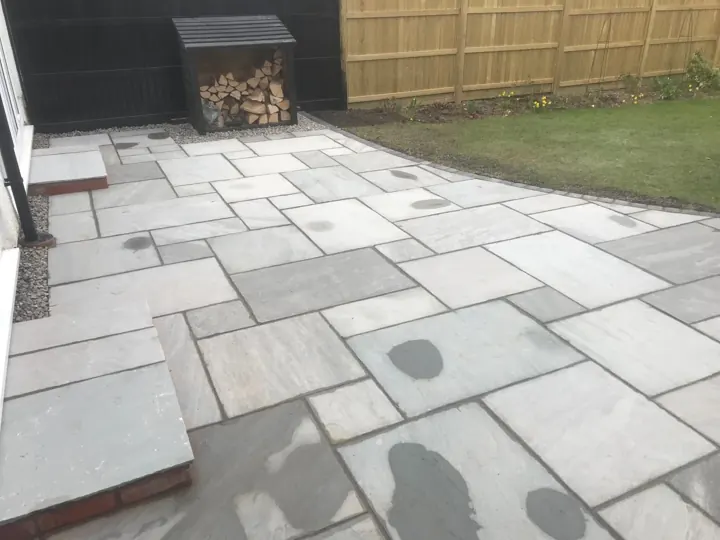
As paving contractors across Coleford, a town we work in regularly, CLA Developments builds paths and steps from gate to front door. Streets climb steeply from the Market Place, so most jobs include a flight of steps, and many older cottages have no damp-proof course, so paving is kept low. Forest sandstone suits the conservation area. Free site visit and quote.
“Really nice lads, very easy to get on with.”Checkatrade review, GL14. More reviews
In Coleford, paving often means getting from the gate to the front door, and on a sloping plot that usually means steps. CLA Developments lays garden paths, front entrances and outdoor steps in natural stone and porcelain, with the falls, edging and drainage that keep them sound through a Forest winter. Driveways, block paving and tarmac are outside what we do. Our focus is the routes you walk every day: front paths, side passages, steps up a bank and the landing outside a door. We survey the levels and ground, agree the material with you and give a written quote before anything is dug.
Steps and paths up Coleford slopes
Outdoor steps need even risers and treads all the way up, because one odd step is what trips people. We set them out from the top and bottom levels, build them on a concrete base, and choose a step edge that stands out from the tread so each one is easy to see on a dark evening.
A long path up a slope can sometimes be a gentle ramp rather than steps, which suits buggies, bins and anyone unsteady on their feet. We look at the gradient at survey and suggest whichever works.
Hard frosts on the higher ground lift paving that sits on a thin base. We dig to firm ground, lay a compacted sub-base and bed stone or porcelain on a full mortar bed, so there are no hollows underneath for water to gather and freeze.
How low should paving sit at a Coleford cottage door?
Well below the damp-proof course, or below the inside floor where a cottage has none. The paving at the front door must fall away from the house and stay well below the damp-proof course. Many older Coleford cottages have no damp-proof course at all, so we keep the paving low and leave a gravel strip against the wall so the stone can dry. A threshold that collects rain needs a small channel drain to carry it away.
Natural stone, including local Forest sandstone, suits a stone cottage and its walls. It needs sealing and some cleaning in shady spots. Outdoor porcelain is dense and easy to clean, which helps on paths under trees where moss builds up, but it must be laid on a slurry primer for a proper bond. Edging, whether a stone kerb or a pointed edge course, stops paths creeping into the borders.
Measure the height from the gate to the front door, as many Coleford plots climb enough to need several steps.
Check for a damp-proof course on older sandstone houses, so the new paving can sit low enough.
In the conservation area, keep any old stone kerbs, setts or steps for us to reuse or repair.
Note where water stands after rain, especially by thresholds and side passages.
Look for tree roots near the path line, common on plots towards the Forest edge.
Tell us who uses the path, as a ramp may suit buggies, bins and older visitors better than steps.
Paths, steps and the rest of the Coleford garden
In the centre and on the older streets, front paths are often short and run straight off the pavement, with a step or two because the town climbs so steeply from the Market Place. In the conservation area, a sandstone path and step tends to suit the house better than bright porcelain, and old stone kerbs or setts are worth keeping where they survive.
For a larger sitting area or terrace, our page on patios in Coleford covers the bigger level spaces, and the two are often built together.
That didn't send, sorry. Please try again, or call 07858 305739.
Postcodes
GL16
Council
Forest of Dean District Council
County
Gloucestershire
Typical homes
Older town centre, council estates from the 1940s onwards such as Sunny Bank, late 20th-century private estates
Our cover
Regular cover; urgent jobs depending on the day
Local conditions
What affects paving in Coleford
The things about Coleford homes and ground that change how we plan and price this job, and what each one means for you.
Ground
Carboniferous limestone carrying iron ore, with the high ground to the north and east capped by the sandstone and shales of the Forest of Dean coalfield.1
The ground under a drive or path decides the sub-base depth and how surface water is handled, so we design the base for this soil, not a standard depth.
The town
Market town of about 9,300 people (2021 Census) in the west of the Forest of Dean, a couple of miles from the Welsh border and the Wye Valley, which grew on iron ore, coal and limestone.2
Older streets, steep or narrow access and parking all affect how paving is planned in Coleford, so we look at access at the survey and build it into the timing and the written quote.
Typical homes
Older town centre, council estates from the 1940s onwards such as Sunny Bank, late 20th-century private estates.1
Older and newer homes hide different things behind walls and under floors, so we plan paving in Coleford around the house you have, not a standard job.
Forest of Dean District Council is the planning authority for Coleford. We tell you early whether your job needs planning permission or building regulations approval, and who to apply to.
We don't have a Checkatrade review from GL16 yet. These are word for word from our jobs across Gloucestershire, each with the postcode the work was in.
Fantastic Service
The boys helped us out after we had been let down by a different plumber. Really nice lads, very easy to get on with. Work carried out without any issues.
GL14January 2026
Kitchen mixer tap installation.
Really good, was able to fit the tap and carried out further work to make sure everything was working smoothly.
GL2, GloucesterOctober 2025
Floor tiling
Had approx 8m2 of floor tiles installed, hallway and downstairs bathroom. Job included removal and refitting of vanity unit and back to wall toilet and the install of a new heated towel rail. Very helpful, efficient and friendly company who completed the job over the weekend to fit in with our plans. Would definitely recommend.
Allistar has done an amazing job for my dad’s bathroom, turning it into a shower. He was reliable, professional and did a great job! Would recommend any day :) Thank you
ReliableGL51August 2025
Great bathroom install and great communication
Bathroom installGL4October 2025
Alastair was very helpful & was neat and tidy when work was carried out - would recommend 👍
Good ServiceGL4October 2025
CLA Developments Ltd was incorporated in October 2025. Reviews dated before then, and any that mention AJH Plumbing and Heating, are from jobs done by the same team under its earlier trading name.
Yes. We measure the total rise, divide it into equal steps with comfortable treads, and build them on a concrete base with a stone or porcelain finish. Where the slope is long, a landing part way up makes the climb easier. Handrails can be added where they would help.
Usually water has got under slabs laid on a thin or patchy base, frozen and pushed them up. It is common on colder high ground. Relaying on a compacted sub-base with a full mortar bed, and making sure the path sheds water, stops it happening again.
No. We lay paths, entrances, steps and patios in natural stone and porcelain, but not driveways, block paving or tarmac. For a drive, a specialist driveway contractor is the right choice. We are happy to lay the path and steps that lead from it to the door.
It usually looks best. Coleford's historic centre is built of Forest sandstone and render, and a sandstone path and steps sit well in front of it. Porcelain is easier to clean but can look out of place on a period frontage. If the house is listed, check with Forest of Dean District Council before changing the approach.
We measure the total rise and run first, then divide it into equal steps so every riser matches. Each flight is built on a concrete base, with treads that fall slightly to shed water and a contrasting edge so each step is easy to see. On a long climb we add a landing halfway.
The steps decide most of it. A steep front garden can need a long flight with equal risers on a concrete base, and on a tight plot that means hand digging and carrying. Older cottages may need paving lowered and a gravel strip against the wall. Pennant sandstone for the conservation area takes longer than porcelain. Lifting from frost on the higher ground calls for a proper base. We quote in writing after a free site visit.
Free quotes & advice
Get a no-obligation quote and straight answers about your project. We will help you choose tiles that suit the room and plan the layout before anything is fixed.