CLA Developments regularly works as renovation builders in Coleford, on homes from 18th and 19th-century sandstone houses near the Market Place to inter-war council houses at High Nash and Tufthorn Avenue. We take off damp-trapping cement and gypsum, put lime back on old stone and run every trade as one team. A walk-round is free, and the quote comes on paper.
“Really nice lads, very easy to get on with.”Checkatrade review, GL14. More reviews
Renovation builders in Coleford need to understand Forest stone. Many of the town's older cottages and terraces were built for mining and quarrying families, with solid stone walls, small rooms, low ceilings and later additions in brick or block. Over the years many have been patched with cement and gypsum, sealed in and left damp. CLA Developments renovates these houses room by room or as a whole, covering structure, layouts, kitchens, bathrooms, floors and joinery. We survey first, tell you what we find and agree every material and finish with you before anything comes out.
Bringing an old Coleford sandstone house back to life
Most of Coleford's historic centre dates from the 1790s to the 1830s, in squared sandstone that was often lime-washed and later rendered or pebble-dashed. The conservation area appraisal warns that hard cement mortars speed up weathering of the local sandstones. Inside, gypsum on solid stone traps the same moisture, so damp patches, blown plaster and flaking paint often go once those materials come off and lime goes back on.
Floors are the next thing to check. Many older houses have solid floors laid on earth, sometimes with old flagstones under later concrete. Relaying them with a membrane and insulation, and perhaps underfloor heating, makes a big difference to comfort. Upstairs, joists may have been notched badly for old pipes or cables and need strengthening.
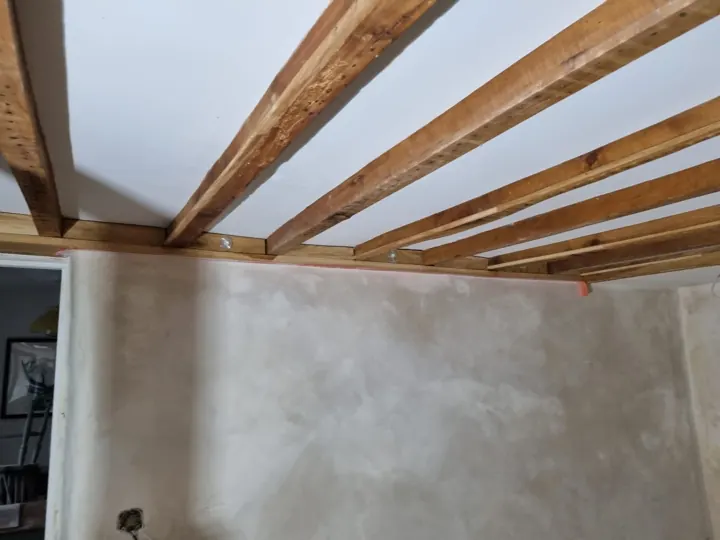
Where the house suits it, exposing original stone or beams can be striking. We check what is behind the plaster first, because the softer brown sandstone found in many back walls was never meant to be seen, and not every wall was built to be bare.
About 17 listed building entries sit in the conservation area, and the appraisal favours natural slate or clay tile roofs over concrete tiles. If your house is listed, much of a renovation needs consent from Forest of Dean District Council, so we plan the work with that in mind.
Can I open up the rooms in a Coleford stone house?
Usually yes, with an engineer's design and the right lintel or steel. Opening up a small kitchen into a back room, moving a bathroom upstairs or creating an en-suite are common requests. Taking out a wall in a stone house needs a structural engineer's input, temporary support and a correctly sized lintel or steel with proper padstones. Building control signs off structural changes, and we arrange the inspections.
On post-war and newer Coleford houses, renovations are often about reworking a dated layout: a kitchen-diner, a downstairs toilet or a utility room. The structure is simpler, but plumbing and drainage routes still decide what goes where.
Before renovating a house in Coleford
Check whether the house is listed or in the conservation area round the Market Place, and what that means for windows, roofs and walls.
Look for cement pointing, cement render or gypsum on old sandstone, the usual cause of damp in the town's older houses.
Lift a corner of carpet to see whether the ground floor is solid, flagged or suspended timber.
If roof or loft work is planned, ask whether a bat survey is needed, as part of the parish is a bat Special Area of Conservation.
Gather any old drawings or surveys, and note later extensions in brick or block.
Agree what stays original, such as flags, beams and panelled doors, before strip-out begins.
Finishing and making good
A renovation lives or dies on the finish. Lime and gypsum plastering in Coleford is part of what we do, along with joinery, tiling and decoration preparation. For smaller faults found during the work, such as a rotten joist end or a cracked lintel, our builders in Coleford cover the fix.
That didn't send, sorry. Please try again, or call 07858 305739.
Postcodes
GL16
Council
Forest of Dean District Council
County
Gloucestershire
Typical homes
Older town centre, council estates from the 1940s onwards such as Sunny Bank, late 20th-century private estates
Our cover
Regular cover; urgent jobs depending on the day
Local conditions
What affects a renovation in Coleford
The things about Coleford homes and ground that change how we plan and price this job, and what each one means for you.
Building materials
Exposed squared and coursed sandstone in the centre, much of it later lime-washed, rendered, roughcast or pebble-dashed.1
We match or work with the materials your house is actually built from, so the new work sits right with the original fabric and stays sound.
The town
Market town of about 9,300 people (2021 Census) in the west of the Forest of Dean, a couple of miles from the Welsh border and the Wye Valley, which grew on iron ore, coal and limestone.2
Older streets, steep or narrow access and parking all affect how a renovation is planned in Coleford, so we look at access at the survey and build it into the timing and the written quote.
Typical homes
Older town centre, council estates from the 1940s onwards such as Sunny Bank, late 20th-century private estates.3
Older and newer homes hide different things behind walls and under floors, so we plan a renovation in Coleford around the house you have, not a standard job.
Forest of Dean District Council is the planning authority for Coleford. We tell you early whether your job needs planning permission or building regulations approval, and who to apply to.
We don't have a Checkatrade review from GL16 yet. These are word for word from our jobs across Gloucestershire, each with the postcode the work was in. CLA Developments Ltd was incorporated in October 2025. Reviews dated before then, and any that mention AJH Plumbing and Heating, are from jobs done by the same team under its earlier trading name.
Fantastic Service
The boys helped us out after we had been let down by a different plumber. Really nice lads, very easy to get on with. Work carried out without any issues.
GL14January 2026
Reliable
Allistar has done an amazing job for my dad’s bathroom, turning it into a shower. He was reliable, professional and did a great job! Would recommend any day :) Thank you
GL51, CheltenhamAugust 2025
Would highly recommend!
Alistair fixed our staff toilet in the office and did a great job, everything was left very clean and tidy, and he was very efficient. Would highly recommend!
All good. Alistair was knowledgeable, reliable and punctual. Good workmanship AAA*
Leaking toilet cisternGL2February 2025
Very pleased with Alistair. Nice chap, good communication and work completed quickly and on time. Very good quality job, would definitely recommend to others.
Tiling around a bath, fitting new shower, tap and shower screenGL2February 2025
Following a leak from the toilet area in the cloakroom, Alastair assessed the situation and dealt with the problem. It is finished and he left it clean and tidy. Very pleased with the work he has done and I would thoroughly recommend him.
Leak in the cloakroomGL3February 2025
CLA Developments Ltd was incorporated in October 2025. Reviews dated before then, and any that mention AJH Plumbing and Heating, are from jobs done by the same team under its earlier trading name.
Often because the walls have been sealed with cement render, cement pointing or gypsum plaster, which trap moisture in solid stone. Leaking pipework, blocked gutters and high ground levels outside can also cause it. We check those first, then look at replacing the wrong materials with lime.
Usually, with the right support. A structural engineer specifies the lintel or steel and padstones, we prop the wall during the work and building control inspects it. In a listed building you will also need consent first, so check with Forest of Dean District Council.
Both. Some owners renovate one room at a time, others do the whole house in one programme of works. Because we cover building, plumbing, heating and tiling, we can plan the order so nothing is done twice, such as pipework before floors.
For many changes, yes. Listed building consent from Forest of Dean District Council covers alterations inside and out, including removing walls, changing windows and stripping historic plaster. Like-for-like repairs are often fine. Talk to the council early, and we will plan the work so the consent fits the schedule.
Natural slate or clay tiles, matching what was there. The conservation area appraisal advises against concrete tiles and artificial slate in the historic core. If you are re-roofing as part of a renovation, we check the timbers and the existing covering at survey and quote for a like-for-like finish.
The stone and the slope. Older houses in the centre are sandstone that was often rendered later, and replacing cement and gypsum with lime takes time. The steep fall from High Street to Market Place means some ground floors sit a storey lower, with damp and access to match. The 1980 conservation area and listed fronts may need consent and natural slate or clay roofs. Parts of the area are old mining ground. We give a clear written quote after a free site visit.
Free quotes & advice
Get a no-obligation quote and straight answers about your project. We're happy to help you plan a build or renovation so it runs efficiently.