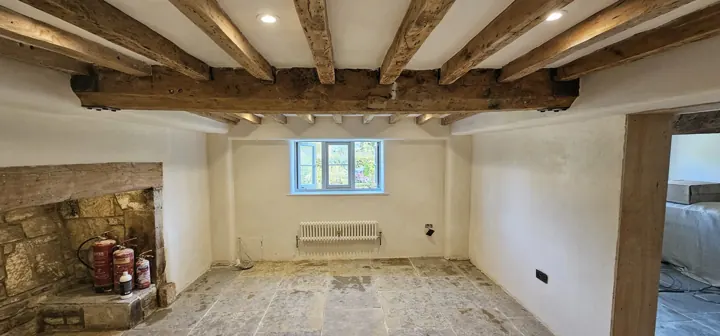
CLA Developments' renovation builders in Cheltenham take on whole houses, from Victorian villas and flats in Regency townhouses, with their lath and plaster ceilings and lime-plastered walls, to 1950s no-fines houses in Hesters Way. Our own team does the structure, plumbing, heating and plastering. We walk round free and put the price in writing.
“Very friendly and prompt at replying - would certainly recommend”Checkatrade review, GL52. More reviews
Renovation builders in Cheltenham are often asked to take on a house that has not been touched for decades: a Victorian villa with old wiring and cold rooms, a flat in a Regency conversion with a tired kitchen and bathroom, or a 1960s house that needs opening up. The hardest part is getting the order right, so nothing has to be ripped out twice. We plan the full programme of works with you, carry out the building, plumbing, plastering, tiling and joinery with one team, and bring in a qualified electrician for the electrics. The first step is a free survey, followed by a written quote.
Getting the order right in a Cheltenham renovation
A renovation goes wrong when finishes go in before the hidden work is done. We strip out first and look at what is behind the walls and under the floors, then do the structural work, then first fix plumbing, heating and electrics, then plaster, then floors, kitchens and bathrooms. Every trade inside the walls finishes before the walls are closed.
Most Cheltenham customers live in during the work, so we usually phase it by floor or by room. Keeping one bathroom and some kind of kitchen working through each phase is something we plan from the start.
Strip out and investigate
Structural repairs and new openings
First fix plumbing, heating and electrics
Plastering and making good
Floors, kitchens, bathrooms, joinery and decoration
Victorian and Regency houses
Period houses in Cheltenham have lath and plaster ceilings, cornicing, suspended timber floors and often lime plaster on solid walls. We repair rather than replace where the original is sound, and use breathable materials on walls that were built to breathe. Our plastering work in Cheltenham covers lime repairs as well as modern skimming.
Old floors often hide surprises: notched joists from past plumbing, rot where a leak went unnoticed, or a floor that has dropped towards a chimney breast. We find these early and price them clearly rather than discovering them halfway through.
On the Pittville estate, laid out from 1825, and in the Regency terraces of Lansdown and Montpellier, many houses are listed and sit inside the Central Conservation Area. Listed building consent can be needed for internal changes such as removing walls, fireplaces or plasterwork, so we read any consent before pricing and protect original features during the work.
Before a renovation starts in Cheltenham
Check whether the house is listed, and read any consent before we plan the order of works.
Find out which conservation area character area your street sits in, as it may affect windows and roofs.
Book an electrical inspection early, because old wiring changes the programme.
In a Regency or Victorian house, look for old stains on ceilings below bathrooms, a sign of past leaks.
For a 1950s or 1960s house, find out the wall construction; no-fines concrete is common in Hesters Way.
Decide which bathroom and kitchen stay working during each phase of the work.
Can I knock through a wall in a post-war Cheltenham house?
Usually yes, with a steel beam where the wall is load-bearing. In 1950s to 1970s Cheltenham houses, the usual aim is light and space: a knock-through from kitchen to dining room, a new kitchen and a modern bathroom. Removing a load-bearing wall needs a steel beam sized by a structural engineer and building control approval, which we organise around the work. Pairing this with a new kitchen in Cheltenham means one team handles the opening and the fit.
Many 1950s and 1960s council houses on the Hesters Way estate were built in no-fines concrete, which needs a different approach to openings, fixings and insulation than a brick cavity wall. We confirm the construction at the survey, and an engineer designs any new opening.
Taking on a renovation in Cheltenham? Call 07858 305739 and we will walk the house with you and plan the work in the right order.
Free quote
Free quote for a renovation in Cheltenham
We reply within one working day, Monday to Friday, 9am to 5pm.
That didn't send, sorry. Please try again, or call 07858 305739.
Postcodes
GL50 to GL53
Council
Cheltenham Borough Council
County
Gloucestershire
Typical homes
Historic town centre, Victorian and Edwardian suburbs, later 20th-century housing
Our cover
Regular cover, including urgent call-outs
Local conditions
What affects a renovation in Cheltenham
The things about Cheltenham homes and ground that change how we plan and price this job, and what each one means for you.
Building materials
Stucco over brick on early 19th-century terraces such as Rodney Terrace (about 1809 to 1820), with slate roofs, some of them mansard, and cast and wrought iron railings and balconies.1
We match or work with the materials your house is actually built from, so the new work sits right with the original fabric and stays sound.
The town
Historic spa town beside the Cotswolds that claims to be the most complete Regency town in Britain.2
Older streets, steep or narrow access and parking all affect how a renovation is planned in Cheltenham, so we look at access at the survey and build it into the timing and the written quote.
Typical homes
Historic town centre, Victorian and Edwardian suburbs, later 20th-century housing.3
Older and newer homes hide different things behind walls and under floors, so we plan a renovation in Cheltenham around the house you have, not a standard job.
Cheltenham Borough Council is the planning authority for Cheltenham. We tell you early whether your job needs planning permission or building regulations approval, and who to apply to.
Word-for-word Checkatrade reviews from jobs in GL50 to GL53, each with the postcode the work was in. CLA Developments Ltd was incorporated in October 2025. Reviews dated before then, and any that mention AJH Plumbing and Heating, are from jobs done by the same team under its earlier trading name.
Reliable
Allistar has done an amazing job for my dad’s bathroom, turning it into a shower. He was reliable, professional and did a great job! Would recommend any day :) Thank you
GL51, CheltenhamAugust 2025
Would highly recommend!
Alistair fixed our staff toilet in the office and did a great job, everything was left very clean and tidy, and he was very efficient. Would highly recommend!
GL52July 2025
Friendly and prompt service
We’d been let down by other tradespeople so were really grateful when Alistair could come round and help us with a small plumbing job. Very friendly and prompt at replying - would certainly recommend
More reviews from customers in GL50, GL51 and GL52
Great service, Alistair was friendly and pleasant and the job was completed to a high standard.
Heating and plumbingGL50January 2026
Alistair did a great job refitting and tiling a bathroom for us. The job was completed on time and Alistair even managed to fit in some additional small plumbing jobs which was really helpful. Alistair is straightforward and easy to work with.
Bathroom refitGL52January 2026
Was able to repair quickly, when further issues developed came straight back and sorted. Left area clean, no parts left behind. Friendly, polite and professional.
Start with the structure and the services, not the kitchen. Check the roof, damp, floors, wiring and heating first, because these decide the order of everything else. A survey of the whole house gives you a priority list and a realistic budget before you choose any finishes.
Yes, with care. Listed building consent may be needed for changes that affect the building's character, including some internal work. Check with Cheltenham Borough Council early. We then work to any conditions, repairing original features where possible.
Electrical work is carried out by a qualified electrician, which we coordinate as part of the programme. That way the first fix wiring happens alongside the plumbing, before plastering, and the final connections happen after decoration, with no gaps in the schedule.
Not harder, but different. No-fines houses have solid concrete walls rather than brick and block cavities, so openings, fixings and insulation follow different rules. A structural engineer should design any new opening, and external wall insulation is often the practical way to make them warmer. We check the construction at the survey and plan around it.
Age and construction first: a Regency or Victorian house with sagging lath ceilings, lime walls and suspended floors needs slower, more careful work than a post-war semi. The Central Conservation Area covers most of the Victorian and Edwardian suburbs, so outside changes may need planning permission, and listed flats need consent. Steel beams for knock-throughs, scale protection for new heating in hard water, and parking on town-centre streets all play a part. You get a clear written quote after a free site visit.
Free quotes & advice
Get a no-obligation quote and straight answers about your project. We're happy to help you plan a build or renovation so it runs efficiently.